Best Eyeglasses for Driving at Night
Learn what to look for in nighttime driving glasses, including accurate prescription lenses, anti-reflective coatings, clear lens options, and comfortable frames. Discover why yellow-tinted glasses may not improve night-driving safety and how to manage headlight glare.
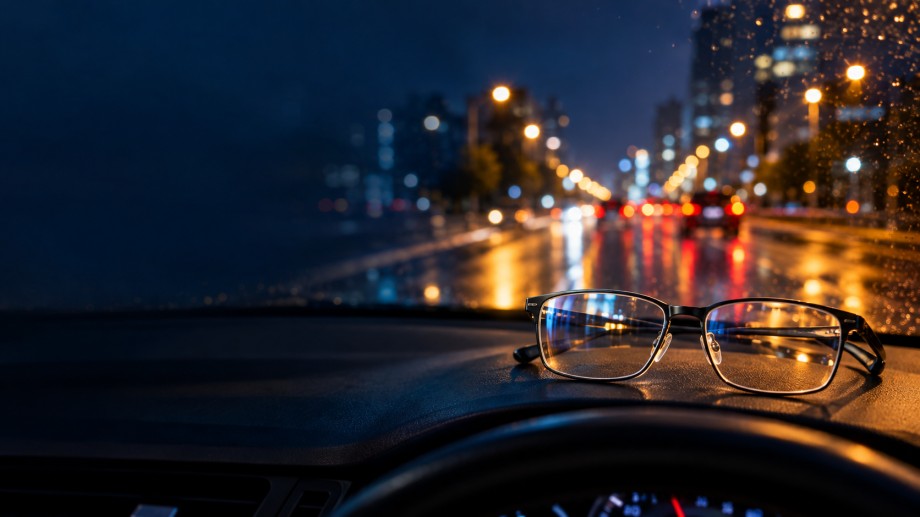
Driving after sunset can become uncomfortable when headlights from oncoming vehicles, reflections on the windshield, or poorly lit roads make it harder to see clearly. The right eyeglasses can help you manage these challenges, but choosing a suitable pair requires more than looking for lenses advertised as anti-glare.
For night driving, clear vision, an accurate prescription, clean lenses, and effective glare management matter more than lens color or marketing claims. Here is what to consider before buying eyeglasses for driving at night.
Why Night Driving Can Be Difficult
Your eyes receive less light after sunset, making it harder to distinguish road markings, pedestrians, cyclists, and objects near the roadside. Bright headlights can create additional discomfort, especially when your eyes need time to adjust between dark surroundings and intense light.
Several factors can contribute to these problems:
Headlight glare: Bright headlights from approaching vehicles can temporarily make it difficult to see details on the road.
Incorrect prescription: Outdated or unsuitable corrective lenses may cause blurred vision, eye strain, or difficulty focusing on distant objects.
Scratched lenses: Scratches and surface damage can scatter light and create distracting reflections.
Dirty lenses and windshields: Dust, fingerprints, and smudges can produce additional glare when illuminated by headlights.
Uncorrected vision problems: Conditions such as cataracts or certain corneal problems can increase glare sensitivity, particularly at night.
Understanding the cause of the problem helps you choose eyewear that addresses your actual needs instead of spending money on features that may offer little benefit.
1. Choose Eyeglasses With the Correct Prescription
Prescription accuracy should be your first priority when selecting glasses for nighttime driving. Even a small change in vision can make distant signs, lane markings, and approaching vehicles harder to identify.
If you already wear prescription glasses, check whether your current prescription still provides clear distance vision. Drivers who wear progressive lenses should also ensure that their lenses provide a comfortable viewing area for looking through the windshield.
When ordering new glasses, consider these details:
Confirm that the prescription is current and suitable for distance vision.
Choose a frame that stays securely in place without sliding down your nose.
Make sure the lenses provide a clear field of view when you look toward mirrors and side windows.
Ask your eye care professional about persistent difficulty seeing clearly at night.
Buying a more expensive frame will not compensate for an incorrect prescription. Clear, comfortable vision should come first.
2. Consider Anti-Reflective Coating on Clear Lenses
Consider anti-reflective (AR) coating if glare from your eyeglass lenses affects your vision. It minimizes reflections on the lens surfaces, helping more light pass through for clearer vision.
For night driving, clear prescription lenses with a quality anti-reflective coating are generally a more sensible choice than tinted lenses marketed specifically for nighttime use.
AR coatings can help reduce reflections from nearby light sources, but they do not eliminate the glare coming directly from an oncoming vehicle's headlights. They also cannot correct an underlying eye condition or make an unsuitable prescription accurate.
When comparing eyeglasses, look for a coating designed to reduce lens-surface reflections. Ask about scratch resistance and ease of cleaning as well, since maintaining clear lenses is important for regular driving.
3. Avoid Yellow-Tinted Night Driving Glasses
Yellow or amber lenses are often advertised as a solution for nighttime headlight glare. Their warmer appearance may seem appealing, but they reduce the amount of light reaching your eyes.
That reduction can make it harder to see pedestrians, road hazards, and objects in poorly illuminated areas. Research has not established that yellow-tinted driving glasses reliably improve nighttime hazard detection or make night driving safer.
For this reason, clear lenses are the better choice for driving in low-light conditions. Avoid dark sunglasses and strongly tinted lenses at night, even if they are marketed as anti-glare eyewear.
If bright headlights consistently bother you, investigate the source of the discomfort rather than relying on a yellow tint to solve the problem.
4. Look for Lens Quality and a Comfortable Frame
The design of your glasses can affect how comfortably you see the road. A suitable pair should remain stable during head movements and provide a clear view without distracting reflections or obstructions.
Consider the following features before ordering:
Clear, undamaged lenses: Choose lenses without scratches, cloudy patches, or visible defects that could interfere with your view.
Appropriate lens material: Polycarbonate and other modern lens materials may offer useful impact resistance, depending on the product. The best option depends on your prescription, frame, and individual needs.
A secure frame fit: Glasses should not slip when you look over your shoulder or turn your head to check traffic.
A practical frame shape: Avoid oversized frames or thick side sections that significantly obstruct your peripheral vision.
Easy maintenance: A lens coating that makes fingerprints and smudges easier to clean can be useful, but it does not replace regular cleaning.
Before purchasing, check whether the selected frame and lens combination is appropriate for your prescription and everyday driving needs.
5. Understand the Difference Between Anti-Reflective and Blue-Light Filtering Lenses
Anti-reflective coatings and blue-light filtering lenses serve different purposes, so they should not be treated as interchangeable features.
Anti-reflective coatings minimize light reflections on eyeglass lens surfaces. Blue-light filtering lenses are designed to reduce the transmission of selected wavelengths of blue light.
Blue-light filtering is not an established solution for headlight glare, and it should not be the main reason for choosing glasses for nighttime driving.
If your main concern is reflections from headlights, prioritize clear lenses with an appropriate prescription and a good anti-reflective coating. You do not need to pay extra for blue-light filtering solely to make night driving safer.
6. Check Your Glasses Before Driving
Even suitable eyeglasses can become less effective when they are dirty, damaged, or poorly fitted. A quick check before leaving can prevent avoidable visual distractions.
Use this simple routine:
Clean your lenses with a suitable lens-cleaning solution and a microfiber cloth.
Check for scratches or coating damage that creates distracting reflections.
Clean the inside and outside of your windshield.
Adjust your glasses so they sit properly and do not slide while driving.
Make sure your headlights and mirrors are clean and functioning correctly.
If glare remains severe despite these steps, arrange an eye examination. Persistent night-vision difficulties may require professional assessment rather than a different pair of glasses.
7. Other Ways to Reduce Headlight Glare
Eyeglasses are only one part of comfortable nighttime driving. Your vehicle's condition, the cleanliness of its glass, and your driving habits can also affect visibility.
A few practical adjustments can make a difference:
Look toward the right edge of your lane when an approaching vehicle's headlights are uncomfortably bright, while continuing to monitor the road.
Keep a safe following distance so you have more time to respond to hazards.
Reduce speed when visibility is poor, especially on unfamiliar roads.
Use your headlights correctly and switch between high and low beams when appropriate.
Keep your windshield clean inside and outside, including areas where haze tends to develop.
Avoid driving when fatigue makes it difficult to concentrate or respond quickly.
Never depend on special glasses to compensate for poor visibility, severe glare, or an inability to see the road safely.
What Are the Best Eyeglasses for Night Driving?
The most suitable option depends on whether you need vision correction and what is causing your difficulty at night.
There is no single frame brand or lens coating that can guarantee safer nighttime vision. The right choice combines suitable vision correction, clear lenses, comfortable fit, and good driving habits.
Conclusion
Choosing the best eyeglasses for driving at night starts with identifying what makes your vision uncomfortable. For most drivers who need corrective eyewear, clear prescription lenses with an anti-reflective coating are a practical option to discuss with an eye care professional.
Avoid dark or yellow-tinted glasses marketed as a universal solution for headlight glare. Keep your lenses and windshield clean, replace damaged eyewear, and seek professional advice if night vision becomes difficult.
If you regularly struggle to recognize road signs, see pedestrians, or recover from headlight glare, do not assume new glasses alone will fix the problem. An eye examination can help determine whether your prescription, eye health, or another factor needs attention before you continue driving at night.


.webp)
.webp)
